Department History
loaction

70-Year History
of the Department of Chemical and Biological Engineering
-
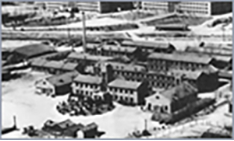
· August 22, 1946
Establishment of Seoul National University by national decree, including the Graduate School and nine colleges. The College of Engineering was launched with 10 departments, one of which was the Department of Chemical Engineering.
-
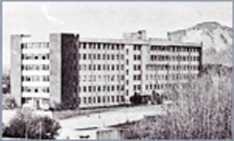
· March 13, 1964
Establishment of the Departments of Applied Chemistry, Applied Physics, and Applied Chemical Engineering.
-
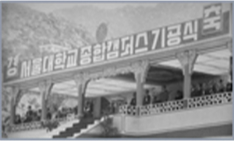
· February 28, 1975
Reorganization: The Departments of Applied Chemistry, Applied Physics, and Applied Chemical Engineering were dissolved.
Establishment of the Department of Industrial Chemistry.
-
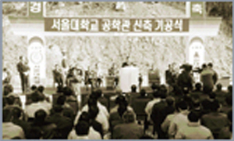
· October 10, 1995
The Departments of Industrial Chemistry, Fiber and Polymer Engineering, and Chemical Engineering were merged into a single unit.
Recruitment was unified under the name “Department of Chemical Engineering.”
-
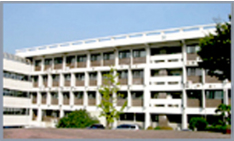
· September 10, 1998
The disciplines of Industrial Chemistry, Fiber and Polymer Engineering, and Chemical Engineering were reorganized into two departments: the Department of Chemical Engineering and the Department of Fiber and Polymer Engineering.
-
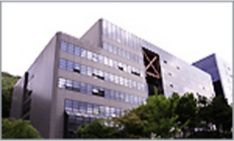
· February 28, 2005
The Department of Chemical Engineering was officially renamed the Department of Chemical and Biological Engineering.
he Department of Chemical and Biological Engineering Today
The department originated from the Department of Applied Chemistry, which had been part of the Departments of Industrial Chemistry and Chemical Engineering in Buildings 30, 32, 34, and 37. In 2001, it was relocated to Building 302, resulting in a more modern and advanced educational and research environment.
To support undergraduate and graduate education, the department also operates 19 general-purpose classrooms—including a large lecture hall—and a seminar room.
As of 2025, the department comprises over 1000 undergraduate students, master’s students, and doctoral students (including combined master’s/Ph.D. programs and research students), with 33 faculty members. It is a well-organized institution that plays a central role in graduate-level education and research at Seoul National University. In particular, since 1999, with significant support from the government, the department has taken part in the BK21 (Brain Korea 21) project, aimed at fostering world-class researchers. The first phase of the program was successfully completed over seven years, and the second phase was launched in 2006 and completed in August 2013, further upgrading the department's global competitiveness in research and education. Since September 2013, the department has been actively engaged in the BK21 Plus program.
The department also leads large-scale national research initiatives through its Chemical Process Technology Innovation Center and seven venture startups associated with faculty members. These efforts allow the department's research to contribute directly to society, as findings are transferred to industry and applied in real-world contexts.
Graduates of the department have gone on to become global leaders in a wide range of fields, including petrochemicals, fine chemicals, pharmaceuticals, semiconductors, displays, cement, glass, paint, and metal materials, in both academia and industry. Notably, approximately 15% of executive-level personnel at mid-sized Korean enterprises are alumni of this department, reflecting its significant contribution to the national economy.